PNR and ticket stay together
The Galileo PNR, the passenger name and the ticket number move from the MIR onto the draft. Those are the fields the desk stops retyping. SYSTACC has not published a minutes-per-ticket figure, so none is quoted here.

Travelport Galileo MIR integration
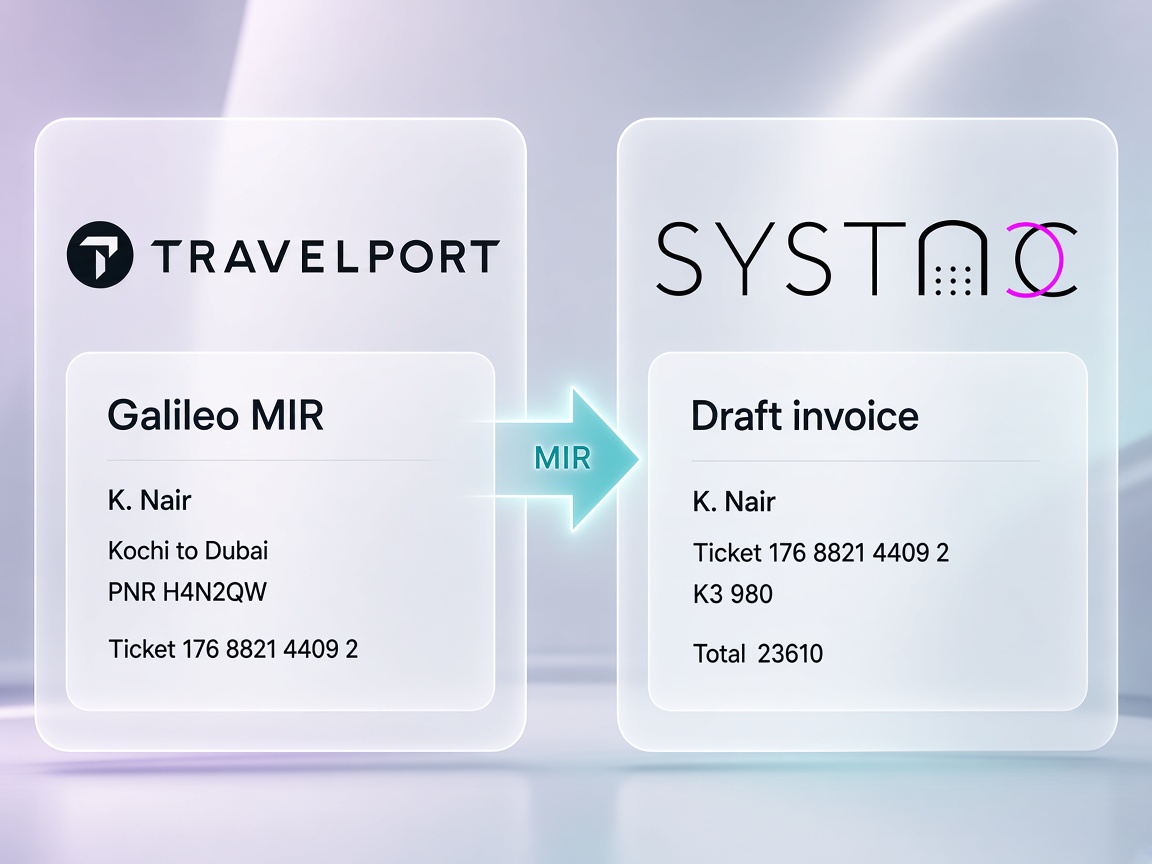
Ticket on Galileo, and the MIR already holds the PNR, the passenger and the ticket number. SYSTACC reads that Travelport file from the folder the office names, and opens a draft invoice with the sectors, the fare and the tax split on the same record.
Overview
Galileo is the Travelport reservation system a lot of agencies still ticket on. In SYSTACC it is the CRS coded 1G. When a ticket is issued, Travelport writes a MIR, a machine interface record, for the back office. Travelport’s own notes describe the header, the passenger section and the fare section: support.travelport.com
The file accounts needs is that MIR. SYSTACC reads the PNR and the airline from the header, each passenger and ticket number, each sector, the base fare and the taxes, and the fare basis when the file carries it.
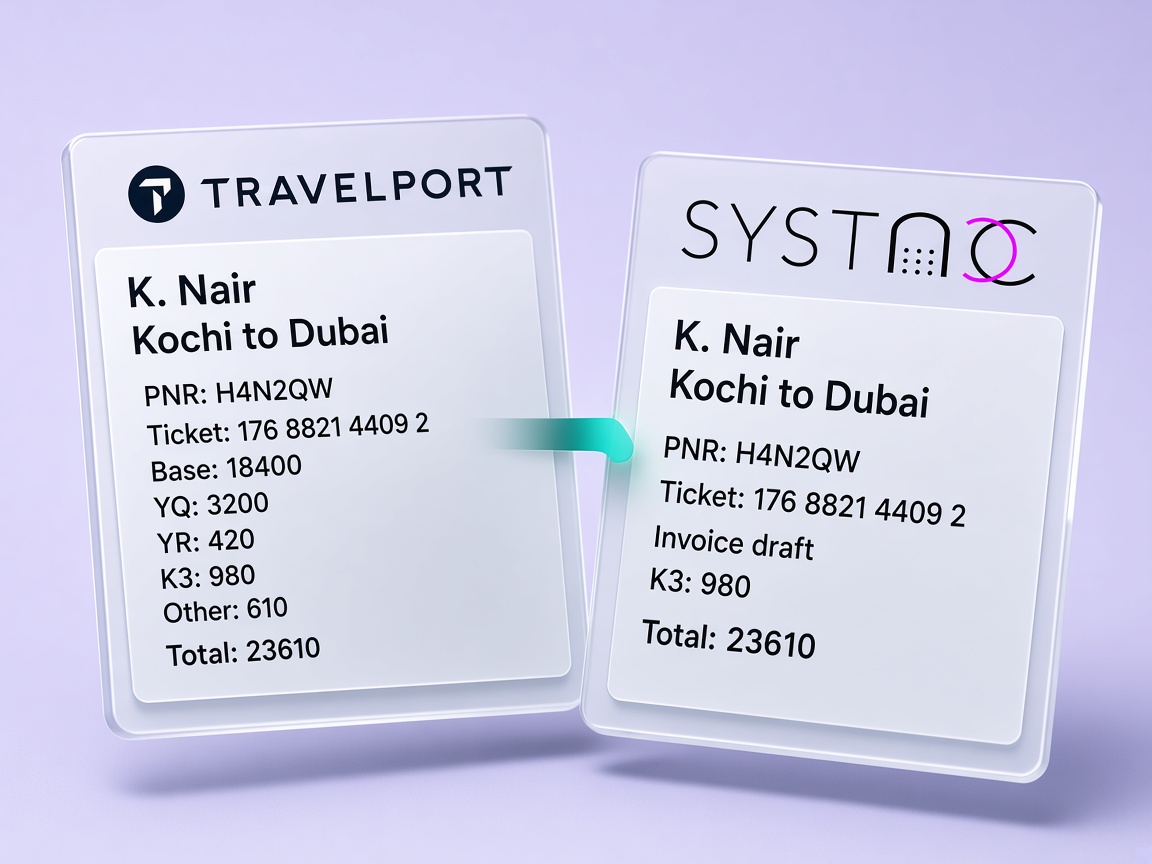
The slip beside this section is a sample built from those fields. Passenger K. Nair, Kochi to Dubai. PNR H4N2QW. Base 18400, YQ 3200, YR 420, K3 980, other tax 610, total 23610, ticket 176 8821 4409 2. The draft keeps that PNR and that ticket number.
A void or a refund is a later accounting document. SYSTACC supports credit notes for flight refunds. A file that does not match a ticket on the books stays for accounts to place.
Benefits
The Galileo PNR, the passenger name and the ticket number move from the MIR onto the draft. Those are the fields the desk stops retyping. SYSTACC has not published a minutes-per-ticket figure, so none is quoted here.
Each flight leg keeps the airline, the flight number, the class, the airports and the times.
Base fare, YQ, YR, K3 and the remaining tax are taken from the fare section. K3 is the GST component on that fare line.
BSP, IATA’s Billing and Settlement Plan, is the single billing statement and remittance an accredited agency uses with participating airlines. Sales and refunds are matched on the ticket number, and the close is the lines that do not agree. The walkthrough is the BSP reconciliation guide.
How it works
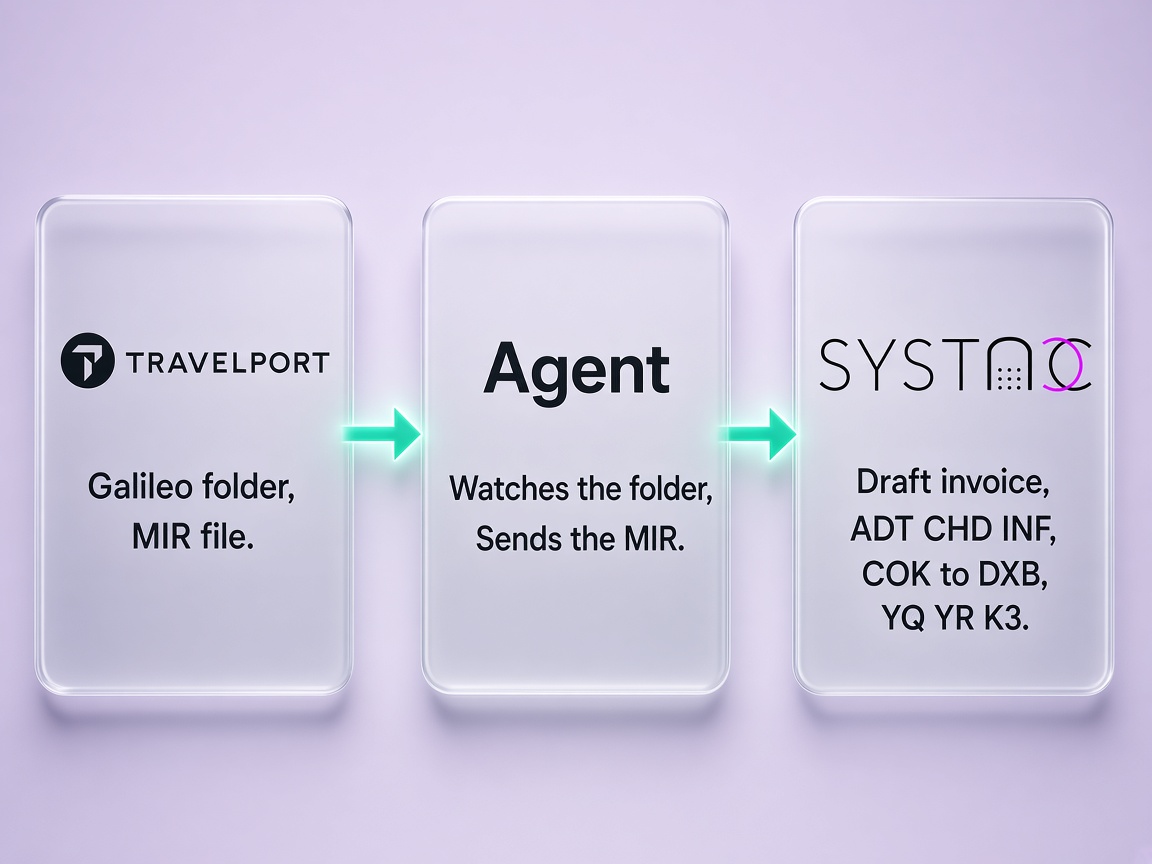
In GDS auto-invoicing, the office enters the folder where Galileo writes MIR files. One path is enough for that computer.
SYSTACC gives a small agent for that PC. It watches the folder and sends new files up.
Booking and ticketing stay on the screens the desk already uses.
SYSTACC reads the file and opens a draft invoice with the PNR, passengers, ticket numbers, sectors, fare and taxes.
The published list shows each file as Galileo (MIR). A file that does not parse stays visible for review.
Built with SYSTACC
The passenger line marks adult, child or infant, and the draft keeps that type with the name and ticket number.
Each sector is its own leg, with the departure and arrival airport, the flight number, the class and the times.
The fare basis is stored on the draft with the fare.
Some MIR files include the airline’s own locator. SYSTACC keeps it when that line is present. Otherwise the Galileo PNR is the reference on the draft.
The same setup can watch an Amadeus AIR folder and a Sabre IUR folder beside the Galileo MIR folder. All three post into the same books.
FAQs
Yes. SYSTACC reads Galileo MIR files, the machine interface records Travelport writes, and opens a draft invoice with the PNR, passenger, ticket number, sectors, fare and taxes. In SYSTACC, Galileo is the CRS coded 1G.
A MIR, or machine interface record, is the back-office record Travelport systems, including Galileo, produce for a ticketed booking. It carries the PNR, the passenger, the ticket number, the sectors and the fare. The formats are explained in the AIR, MIR and IUR guide.
Tickets that arrive in the MIR are posted from that file. The fields that move across are the PNR, passenger, ticket number, sectors, base fare and the tax split. The team reviews the draft and the lines SYSTACC flags.
The fare section is split into base fare, YQ, YR, K3 and the remaining tax. K3 is the GST component on that fare line. Those amounts stay on the draft with the ticket number.
Galileo writes the MIR to a folder on the office computer. In GDS auto-invoicing the office names that folder, installs the SYSTACC agent, and leaves it running. The agent sends new files up, and the published list shows them as Galileo (MIR).
Yes. The same agent can watch an Amadeus AIR folder, a Galileo MIR folder and a Sabre IUR folder. All three post into the same accounting flow.
BSP, IATA’s Billing and Settlement Plan, is the single billing statement and remittance an accredited agency uses with participating airlines. SYSTACC matches sales and refunds on the ticket number. The steps are in the BSP reconciliation guide.
SYSTACC supports credit notes for flight refunds, and for ADM and ACM memos. A refund file that does not match a ticket already on the books stays for accounts to place.
Each passenger on the file is kept, with a ticket number and a type: adult, child or infant. The sectors sit on the same draft.
Travelport’s 2025 update reports earnings and the share of API transactions. It does not publish an air-booking count comparable to the Amadeus Global Report or Sabre’s earnings release, so this page does not quote one. The release is Travelport’s growth update.
Related pages
Amadeus Global Report 2025 counts 484.5 million agency air bookings. SYSTACC posts the AIR file as the invoice, payable, taxes and commission.
View page →Sabre reported 308.5 million air distribution bookings in 2025. SYSTACC reads the IUR and posts the invoice, payable, taxes and commission.
View page →A live walkthrough
Thirty minutes on the calendar. We follow a booking through to the books, and you choose the time.